


How to clean your sneakers: The ultimate guide to cleaning sneakers like a pro
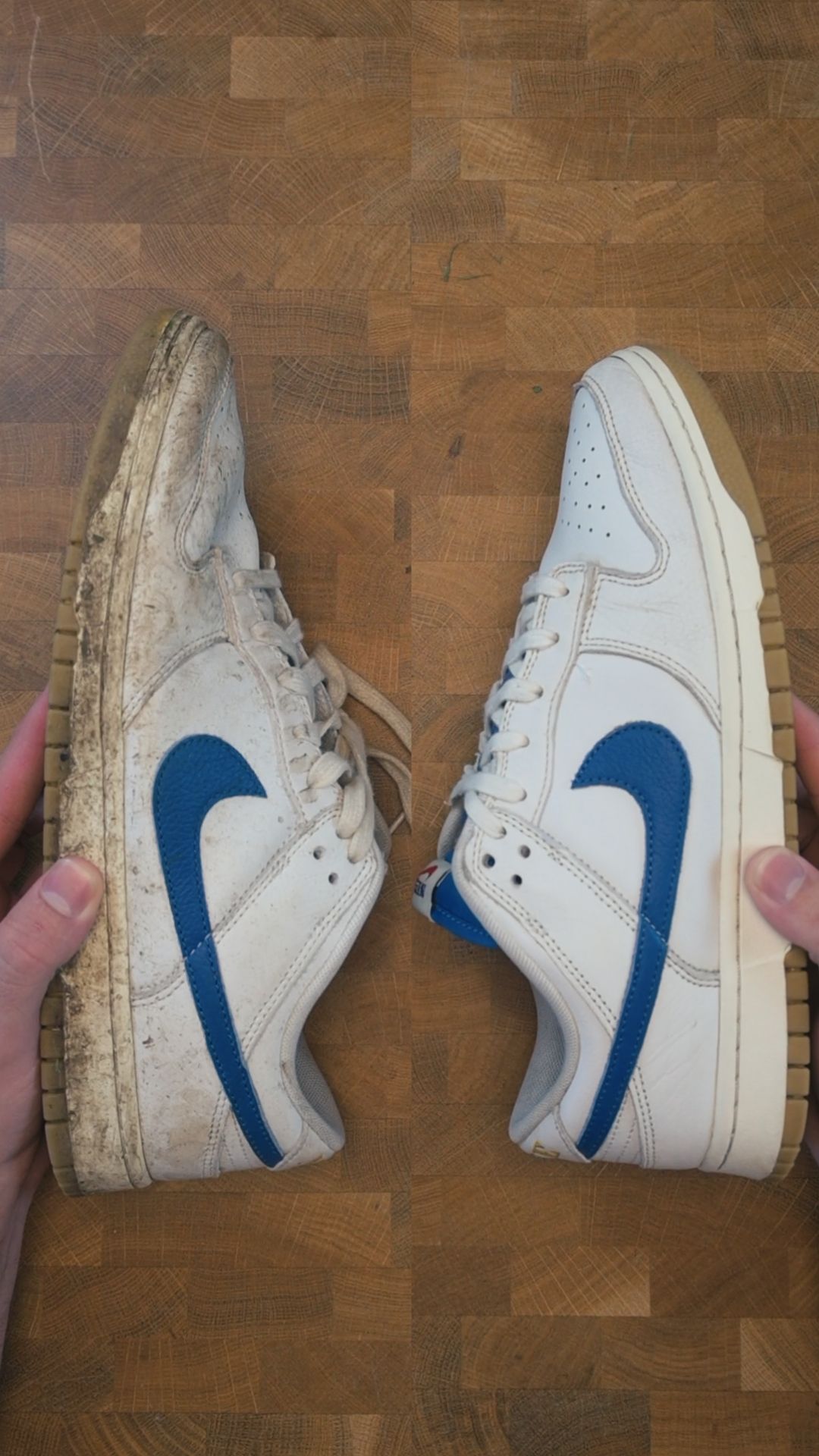
Learn how to wash your sneakers like a pro with the right techniques, products, and step-by-step instructions for the best results.
Sneakers look their best when they are clean and fresh. The feeling of lacing up a pair of dazzlingly clean sneakers is something most people love. But dirt, street dust, spills, and grass stains are inevitable. At Sneakerstvätten, we professionally wash hundreds of shoes and sneakers every month. Here, we show you how to wash your sneakers like a pro, extend the life of your sneakers, and restore them to like-new condition.
Tailor the wash to the material
To get the best results and avoid damaging your shoes, you must tailor the method to the material. Below you will find our specific advice and in-depth guides for the exact material you want to wash.
Leather sneakers
Leather is durable and easy to clean. A good trick is to use a shoe tree inside the shoe (or an old t-shirt or towel if you don't have a shoe tree) when washing with Sneakerstvätten's Cleaner or Foam Cleaner. It stretches the leather and allows you to reach dirt that otherwise sits deep in the creases on the upper. Since wet leather is pliable, you should leave the shoe tree in after washing so that the shoe can regain its original shape.
Suede and Nubuck
Suede requires extra care and should preferably not get too wet. We recommend our Foam Cleaner for suede as it lifts dirt without soaking the material. Always use a brass brush or suede brush to restore the nap after washing.
Canvas and Fabric Shoes
Fabric shoes draw dirt deep into the fibers. Here you must work the cleaner in thoroughly with the brush and be careful to wipe up the moisture with a microfiber towel to avoid water marks.
Quick guide: Clean your sneakers in five simple steps.
(In a hurry? Here is a shorter guide on how to wash your sneakers.)
- Brush off loose dirt: Carefully brush off dust, gravel, or other loose dirt with a dry brush before you start washing.
- Wash the sole: Mix Sneakerstvätten's Cleaner in a bowl with water and use the hard brush to clean the sole. For best results, we recommend also using a dedicated sole cleaner, such as Sneakerstvätten's sole cream. Cut a suitably sized piece of the included scrubbing block and apply a dab of Sole Cream to the block and start scrubbing the sole.
- Wash the upper: Mix 3 sprays of cleaner in a bowl with water. Use a softer brush so as not to damage the materials on the upper.
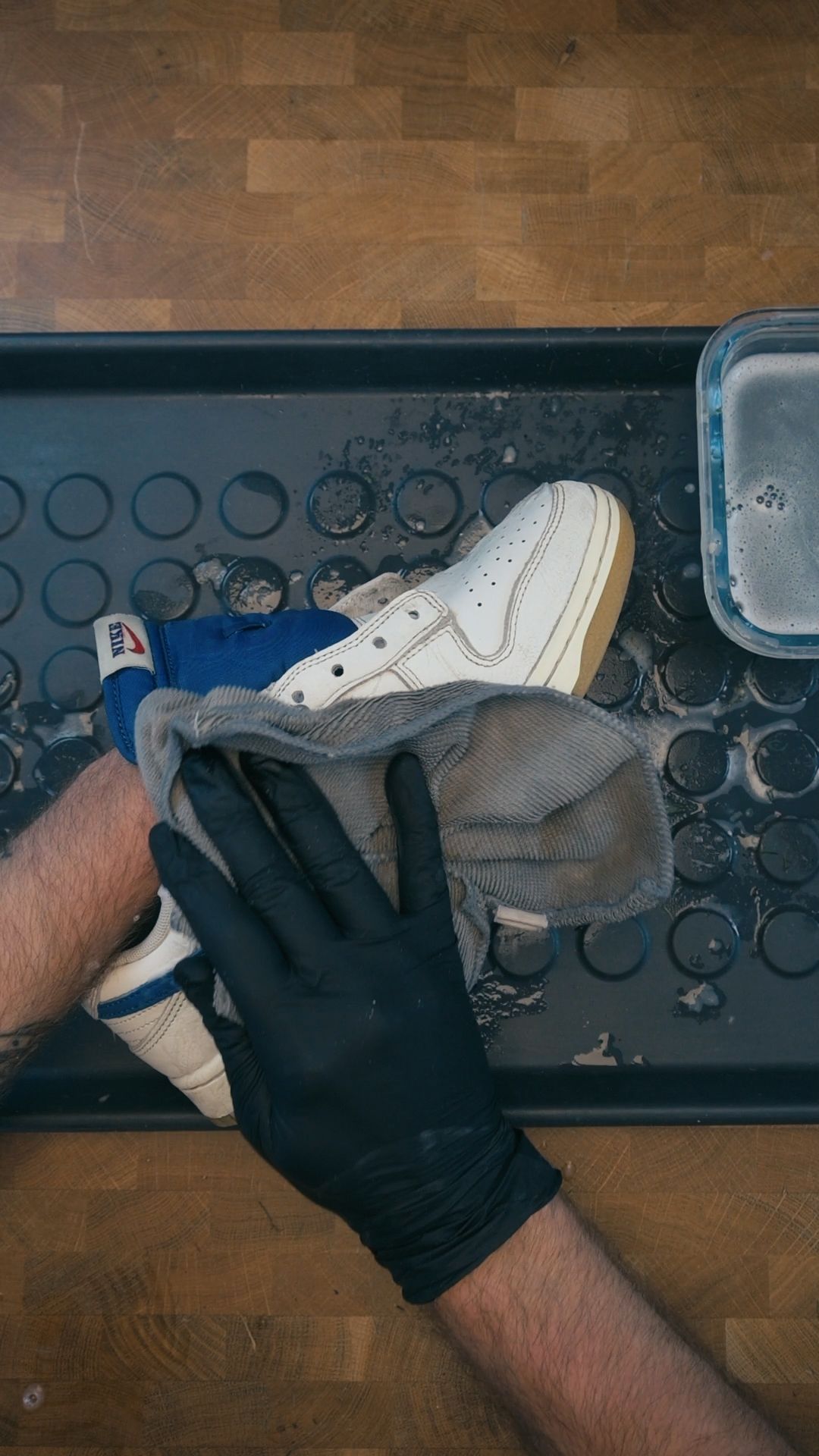
- Wipe the shoes: Use a microfiber towel to soak up water and excess cleaner from the shoes.
- Air dry: Stuff some paper into the shoes to speed up the drying process and to remove any creasing. Let the shoes air dry. Never place the shoes under a heater or try to quickly dry them with a hair dryer.
This is what you need.
For best results, we recommend products that are formulated for shoe care, rather than home remedies that can easily damage the sensitive materials often found on shoes and sneakers, such as leather and suede.
- Shoe cleaner: Which cleaning products you should use depends on which materials you are going to wash. For suede, nubuck, and other sensitive materials, we recommend a cleaning foam, such as Sneakerstvätten's Foam Cleaner. For coarser materials such as canvas, or if you are washing your sneakers, we recommend a concentrated cleaning liquid, such as Sneakerstvätten's Cleaner. The cleaner is mixed in a bowl with water. For soles, we recommend a dedicated sole cleaner (sole cleaner) such as Sole Cream.
- Brushes: A hard brush for cleaning soles. A soft brush for cleaning the upper (leather/fabric).
- Microfiber towel: To soak up and absorb water, dirt, and excess cleaner.
Step-by-step guide: How to wash your sneakers thoroughly.
Step 1: Preparation and laces.
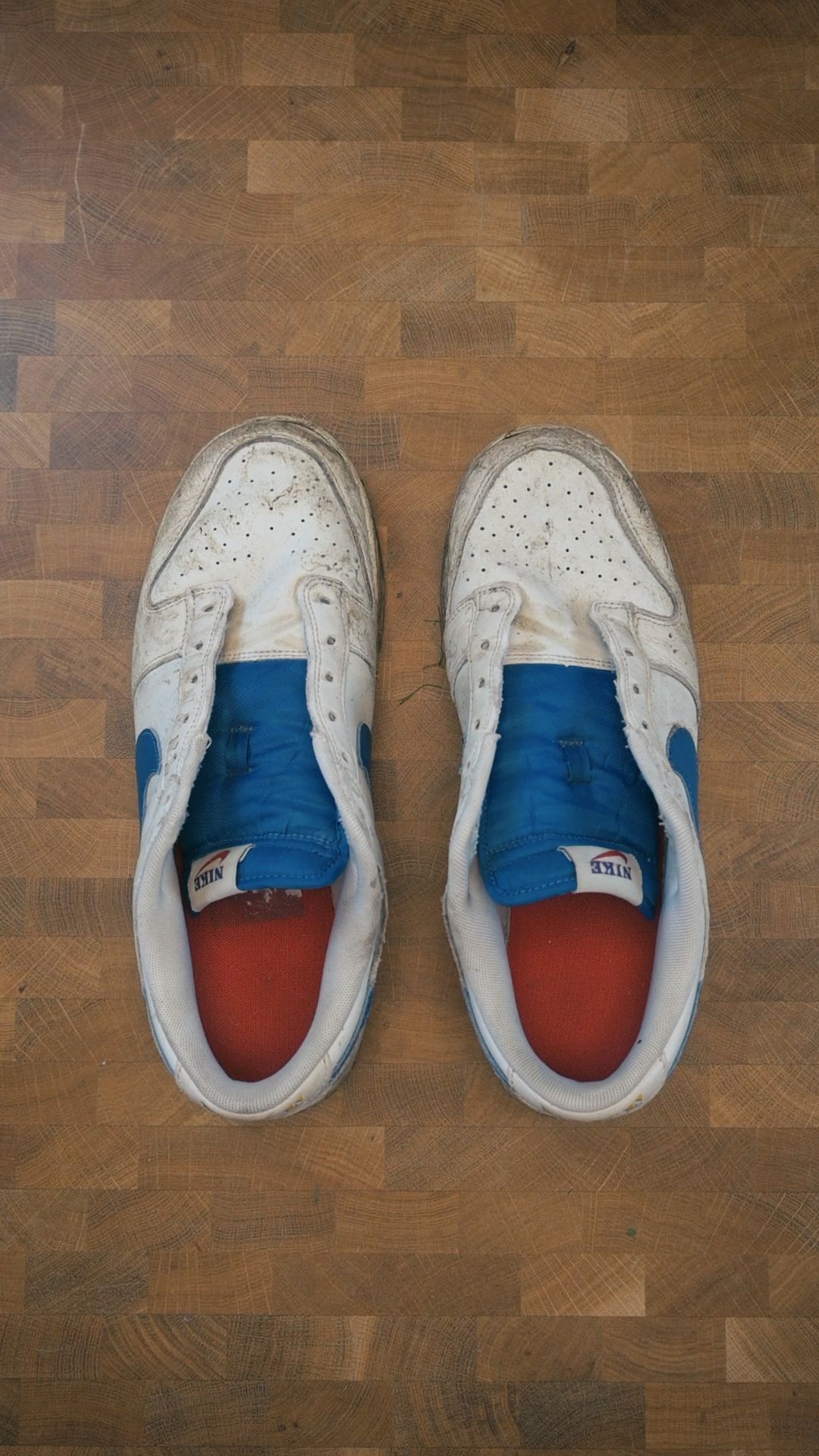
Start by removing the shoelaces from your sneakers. Dip them in a bowl with water, spray a little cleaner on the laces and rub them between your hands, (just like when you wash your hands) and place them in the bowl with water. Let them soak while you wash the rest of the shoes. Brush off loose dirt from the shoes with a dry brush and pick out any small stones from the pattern on the outsole.
Step 2: Wash the sole (Midsole/outsole),
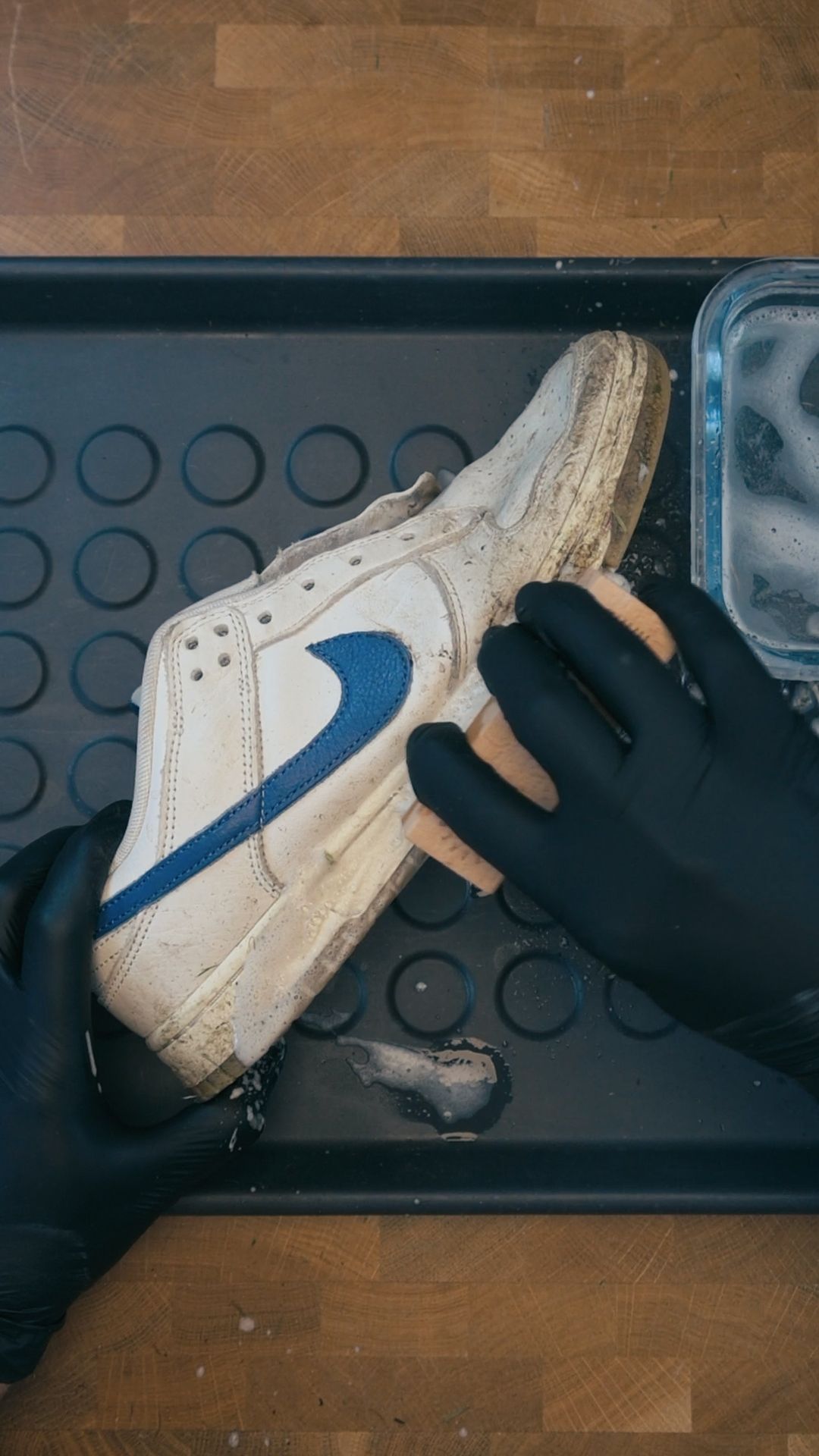
The sole is often what gets absolutely dirtiest on shoes, with stubborn dirt and "scuff marks" (black streaks), so here you need to wash with slightly coarser tools. Drip a few drops of Sneakerstvätten Cleaner into the brush and dip the brush in a bowl with water and start scrubbing and working up a rich foam. You can also spray a few sprays of cleaner directly into the water bowl. You know that the water has the right concentration of cleaner when you can easily work up a rich foam on the shoe. For best results, we recommend our Sole Cream kit with our specially formulated sole cleaning paste (cleaning paste) and the included scrubbing block. Cut off a suitably sized piece of the scrubbing block and apply a dab of sole cream and start scrubbing the sole. The sole cream can be used without other cleaner or in combination with cleaner.
Step 3: Wash the upper (Top) - Be careful here!
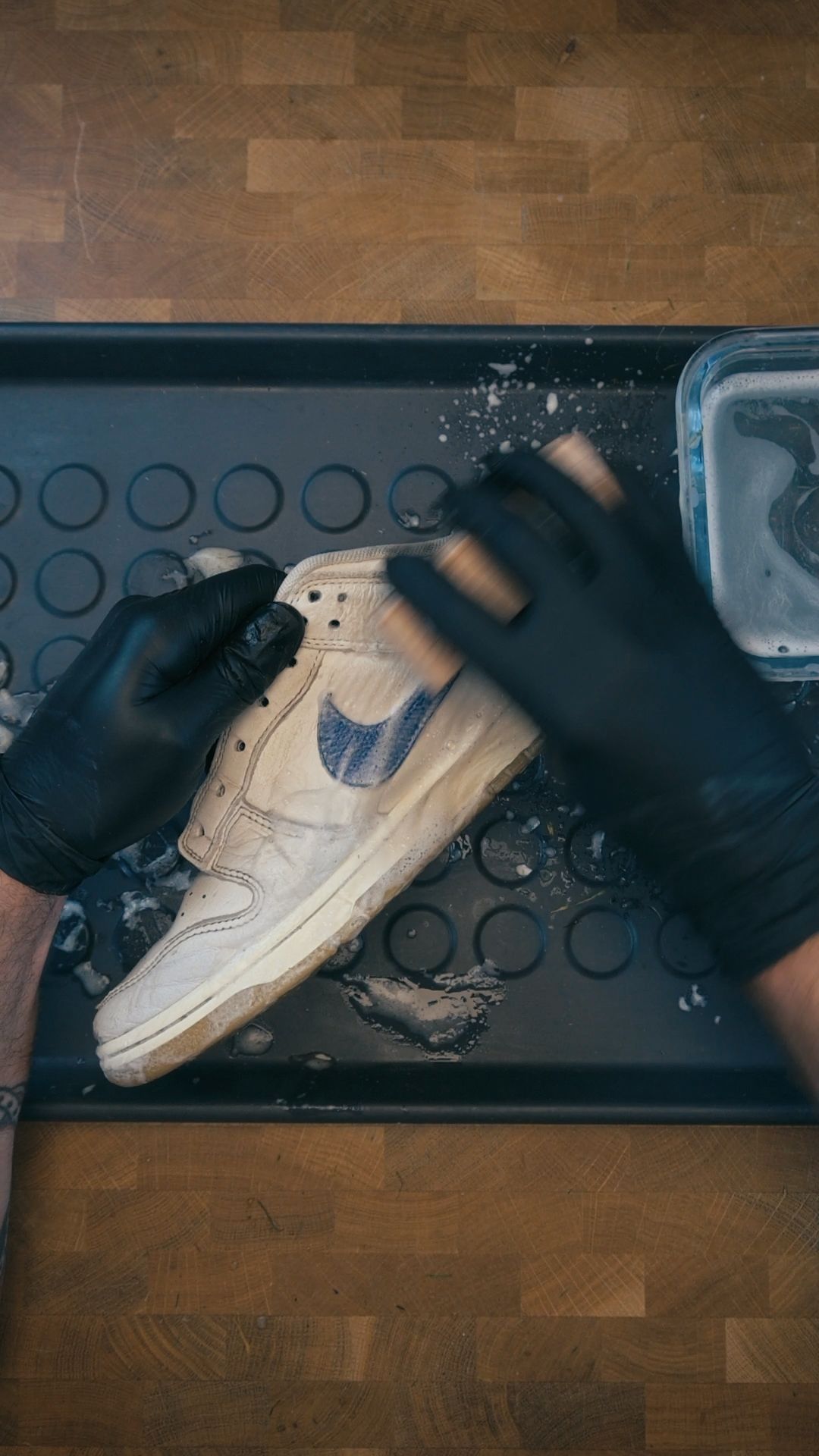
The upper of a pair of sneakers is much more sensitive than the sole as the materials are much more sensitive. Therefore, it is very important to use a soft brush, preferably with a natural brush that does not damage materials such as leather, suede, and mesh.
- For water-sensitive materials such as suede and nubuck, it is important not to wash “too wet” as too much water makes the suede “bleed color”, i.e. lose color and damage the suede if it is dried incorrectly. So to minimize color loss and follow-up work on the suede, we recommend that these materials are washed with a pre-mixed cleaning foam, such as our foam cleaner and soft brush. Apply the foam directly to the shoe or on the brush and wash in small circular motions.
- For materials such as smooth leather, fabric, or mesh, spray a few sprays of cleaner in a bowl with water or drip a few drops directly into the soft brush and dip it in the water. Wash here too in small circular motions with the brush and wipe with a dry microfiber towel as you wash.
Step 4: Drying.
When you are satisfied with the washing of your sneakers, it is time to let them dry. Use a microfiber towel one last time to absorb as much water and leftover cleaner as possible. Stuff some paper, a dry towel, or a shoe tree into the shoes to restore the shape and treat any creasing (creases where the foot bends) and set the shoes aside to air dry. Let your sneakers dry at room temperature. Avoid placing them in direct sunlight or too close to a heater or other heat source. Materials such as leather and suede do not like large temperature fluctuations.
Can you wash sneakers and shoes in the washing machine?
This is one of the absolutely most common questions we get. The short answer is: We usually do not recommend it. As professional sneaker washers and shoe care specialists, we often see the result of machine washing that did not go completely as intended:
- The glue gives way at too high a temperature.
- The leather dries, loses color, and cracks as regular detergents are often not gentle enough for sensitive materials.
- Suede loses all color and discolors the other materials on the shoes.
- The sole can lose its cushioning. In many running shoes, there are inserts built into the sole that are supposed to provide cushioning and spring in the running stride. These can be damaged by machine washing.
If you must wash your sneakers or shoes in the washing machine (fabric shoes only), use a wash program with a low temperature (max 30 degrees), no spin cycle, and always a wash bag. For suede and leather shoes, it is always hand washing that applies.
Common questions about shoe care and sneaker washing: (FAQ)
How do you get yellow stains off white soles?
Yellow stains are often due to oxidation caused by sunlight, heat, and age.. It often requires a special treatment where the soles are bleached white again with bleach and UV light to completely fix it, but a thorough cleaning with sole cream can make a big difference as clean soles are perceived as whiter. If you want to bleach your soles, you are always welcome to come to us and we will fix it.
Does toothpaste or baking soda work for washing shoes?
Toothpaste can work as an emergency solution on rubber soles, but it is difficult to rinse off and can dry out the material. We recommend dedicated sole cleaner for the sake of durability and best results. Baking soda can also be used on fabric and canvas materials but is also difficult to wash out and is not as effective as a cleaning agent specially formulated for shoe/sneaker cleaning. Never use baking soda on suede or leather as it causes discoloration and dries out leather and suede.
How often should you wash your sneakers?
How often you should wash your sneakers depends on how often you use them and under what conditions. If you clean your sneakers regularly, they will last longer and be easier to clean with simpler methods such as quick wipes for sneakers.
How often should you waterproof your shoes?
It depends on how the shoes are used and what material they are. Boots that are used in the winter or in wetter climates should be waterproofed more often. Sneakers that are used during the summer months can be waterproofed with larger intervals between times. A good rule of thumb is that as soon as you notice that water drops do not just roll off the material, but settle and soak in, then it is time to top up with waterproofing. More sensitive materials such as suede should be waterproofed more often, around once every two months.


